The importance of a UXO survey in modern construction and development
Unexpected discoveries during property construction can lead to evacuation, costly delays and emergency response measures that impact both safety, timelines and budgets. That’s why early-stage UXO risk assessments are essential. They provide developers and contractors with the vital information needed to make informed decisions before ground is broken. This helps reduce risk, avoid disruption and support project delivery.
Southway, Plymouth – The Unexploded Bomb
Within the last two years, multiple discoveries of unexploded ordnance (UXO) have occurred across Plymouth, Devon, reflecting the city’s significant wartime history and continued redevelopment activity of unexploded ordnance. On 1st May 2026, a 250kg unexploded German bomb was discovered in the Southway area of Plymouth. The device had remained buried underground for decades before being uncovered during works in the area. This led to thousands of residents facing emergency evacuation and a 400m cordon established around the device (1).
Following the evacuation, the Royal Navy was deployed to investigate and make safe the potentially devastating discovery. After multiple X-rays failed to determine the condition of the bomb’s two fuses, specialists decided it was too dangerous to move. Instead, the device was disposed of in-situ using a controlled burn, resulting in a series of explosions. A safety perimeter was constructed around the site to help minimise the impact on nearby homes and infrastructure. As reported by the BBC News, Nikki Leaper, Assistant Chief Constable at Devon & Cornwall Police, said: “I am very aware that this is our third incident here in Plymouth, the second this year.” (1).
Later, on 23rd May, a separate incident occurred in Cornwall, whereby the Royal Navy Bomb Disposal were called to remove and safely dispose a British 18-pound ordnance, dating back to World War I. (2).
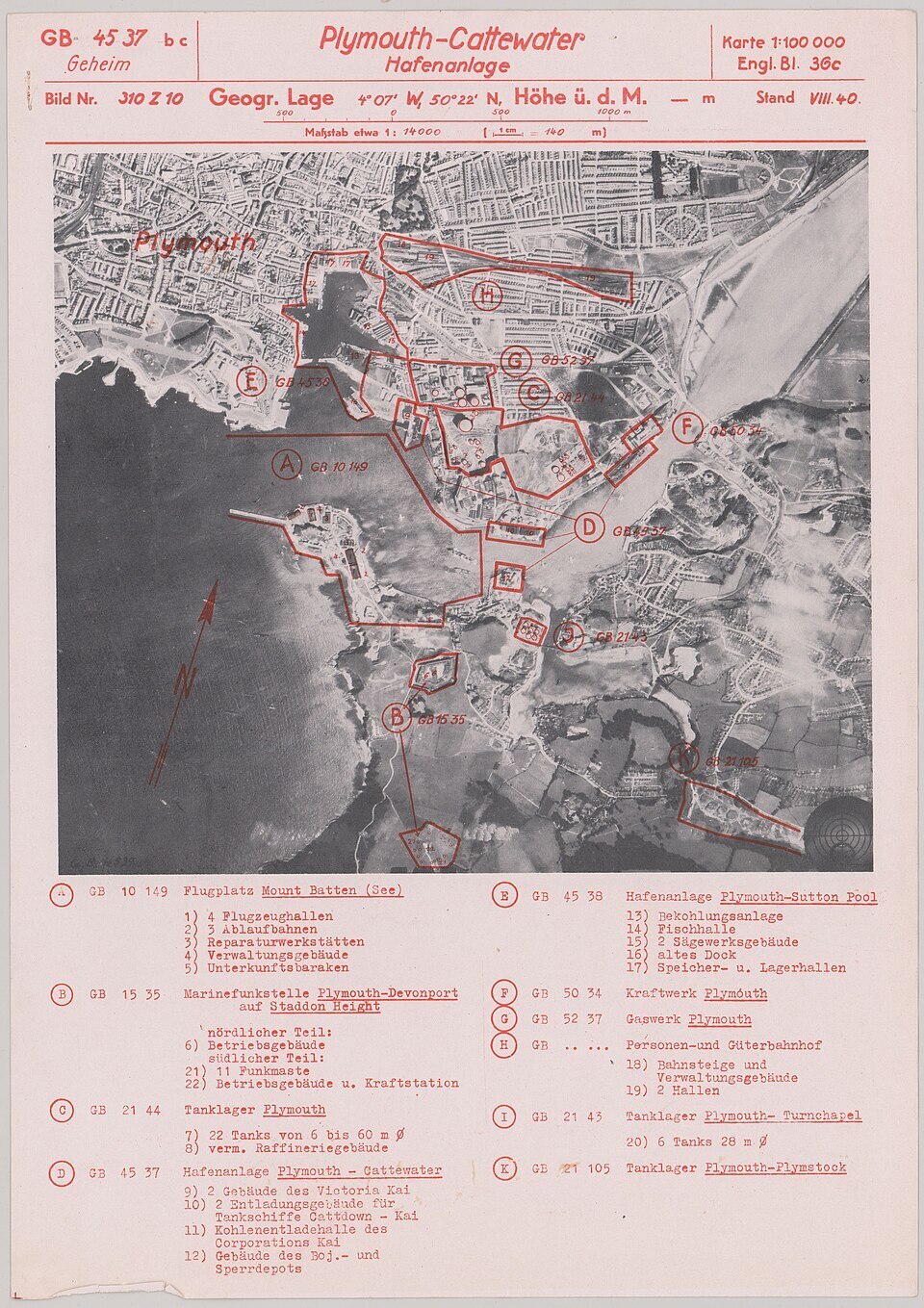
Below: German Luftwaffe WWII Target Dossier for Plymouth-Cattewater, Devonshire, England. Image source: Igne.
What is Unexploded Ordnance? (UXO)
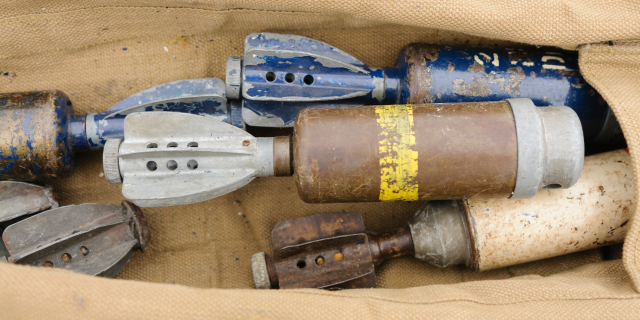
Groundsure has proudly partnered with industry specialists Igne. Research Manager at Igne Emily Dadson explains further: ”Unexploded ordnance is explosive ordnance, such as grenades and bombs, that failed to detonate correctly. In the United Kingdom, UXO typically originates from faulty German World War II bombs that failed to explode, from abandoned or unexploded allied ordnance, or munitions from army training sites.”
But, is this a UK-wide issue?
It’s estimated that around 10% of bombs dropped during the Second World War failed to detonate and may still remain dormant and buried across the UK today. London is considered the highest-risk area, with over 48,000 unexploded bombs reportedly discovered there, followed by cities such as Bristol, Birmingham and Coventry. The risk also extends beyond wartime bombing, with up to 20% of the UK believed to have been used for military training, leaving behind a wide range of UXO.
Emily Dadson said:“Wartime unexploded ordnance is discovered far more often than people realise across the UK. While the large German aerial bombs (like the one found in Plymouth), are relatively rare, they do still surface occasionally in areas that experienced heavy bombing, including strategic coastal towns and cities, major industrial centres and other wartime targets. More commonly, it’s British and Allied ordnance that is found. Large parts of the UK were used for training, defence, storage and other military purposes during both world wars, and this legacy still presents a risk today, often in many unexpected locations.”
UXO: What are the main risks for developers?
The biggest and most critical risk is the safety of everyone on site. If UXO is discovered unexpectedly, it could pose a serious threat to nearby infrastructure and everyone in the surrounding area, potentially resulting in serious injury or even loss of life. Additionally, there are major financial and operational risks. Where risks haven’t been identified and managed at an early stage, the unexpected discovery can bring work to an immediate halt, leading to delays, disruption to the programme and significant additional costs.
Beyond the direct site impacts, UXO incidents can lead to wider consequences including environmental damage, emergency evacuations and disruption to local communities. Developers may also face legal and insurance complications, alongside reputational damage with stakeholders, clients and the community.
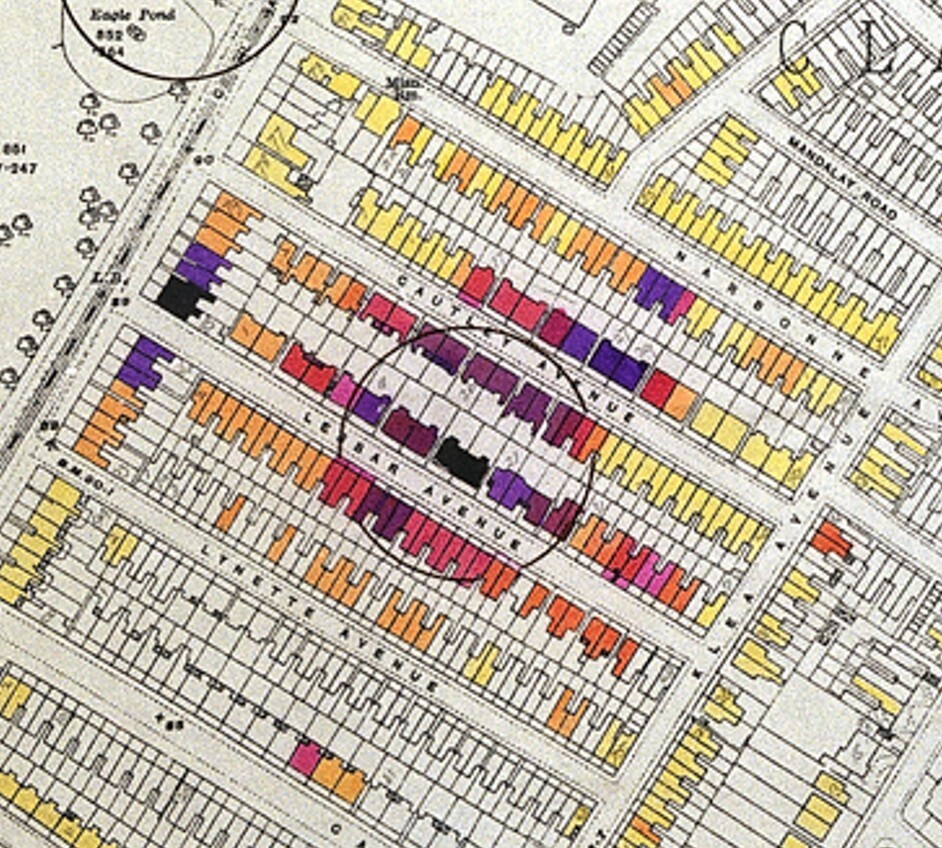
Above: Bomb damage map of Clapham Common, London (dark colours show higher concentration of damage). Image courtesy of Igne.
UXO Reports. What are they and when are they needed?
As development and construction increases, it’s essential to understand the potential risks posed by UXO within the vicinity of your client’s site and to avoid delays with project timescales. Emily Dadson said: ”A UXO report is the first step in the UXO risk mitigation process outlined in CIRIA C681 guidance. The Preliminary Risk Assessment (Stage 1) acts as a screening exercise to identify whether a site may be affected by potential UXO hazards and whether further investigation is required.
We’ve partnered with Igne UXO Limited, to provide a comprehensive view on the risks, so that they can be considered in site assessments.
Groundsure UXO Search – what does it cover?
- Analysis of thousands of projects to mitigate bomb risks on developments since 1991;
- A bombing density map based on official War Office statistics;
- Mapping showing military features and other potential sources of UXO contamination;
- Data analysis of local UXO discoveries, previous Risk Assessments and mitigation works;
- A review of all available bomb census mapping, records and damage assessments;
- A researcher-led assessment, ensuring all relevant and accurate information is taken into account.
Find out more about Groundsure’s UXO Search report and how it can help you today. Contact our Customer Support team on 01273 257755 or email: [email protected]
(1)https://www.bbc.co.uk/news/live/cewp151w9jzt
(2) https://www.cornwalllive.com/news/cornwall-news/bomb-squad-scrambled-after-ww1-10988443