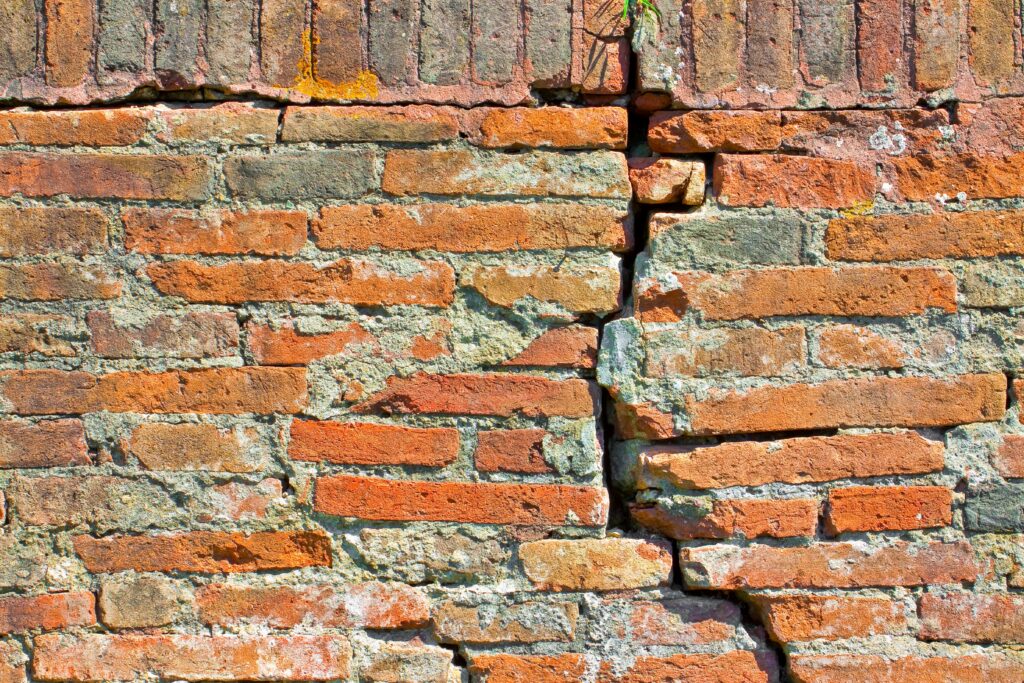
As hotter, drier summers increase shrink-swell subsidence risk, homeowners face a growing climate peril that could hit insurance, mortgageability and property values across vulnerable parts of the UK.
What is shrink-swell subsidence?
We’ve all felt it: the blistering heat of the 2026 UK summer, with successive heatwaves stretching across the country and beyond. For sun lovers, it may have been the perfect summer, but as temperatures begin to fall and the familiar rain returns, the effects of those prolonged periods of heat are only just becoming apparent. Beneath our feet, the extreme conditions have placed increased pressure on the ground itself, with potentially significant consequences for homes and property.
Extreme temperatures are becoming an increasing concern as global temperatures rise and weather patterns become more unpredictable. Shrink-swell subsidence occurs when several factors combine, particularly in clay-rich areas such as London, Essex and Kent. Prolonged heat and dry spells cause clay soils to lose moisture and shrink, while subsequent heavy rainfall can cause them to absorb water and swell again. Much like a clay pot shrinking as it dries, these repeated changes in soil volume can put stress on buildings above. While clay naturally has a stable moisture range, extreme weather can push moisture levels beyond this range, increasing ground movement and subsidence risk.
When clay contracts and shrinks, it can cause downward movement, or subsidence. This may be relatively minor, appearing as small cracks or movement in the ground, but can become more serious where it affects building foundations, utility services or other infrastructure. Conversely, when clay absorbs water and swells, it can cause upward movement, known as heave, which can also place significant stress on structures above.
The repeated seasonal cycle of shrinking and swelling can be particularly damaging over time. Constant movement places ongoing stress on foundations, buildings and underground services, with the effects often developing gradually rather than appearing immediately. Over time, this repeated movement can compromise the integrity of both the ground and the structures built upon it.
Home insurers paid out £72 million for domestic subsidence damage during the second quarter of 2026 – between April and June 2026, with the average claim rising to a record £20,000, according to a report by the Association of British Insurers (ABI). The average payout is over £2,000 more than the same period in 2025. The rise in payouts follows an exceptionally dry spring in England and Wales, the prolonged warm weather increased the risk of ground movement and damage to homes*.
Why does this matter?
The British Geological Survey (BGS) estimate that millions of homes are currently at risk from climate-related subsidence, based on their recent analysis (1), with scientists identifying London, Essex, Kent and a broad stretch of eastern England amongst those areas most vulnerable.
An article by Bloomberg UK (2) mentions the capital is facing historically high levels of subsidence risk after five successive heat waves have dried out the clay soil on which much of the city is built. The impact is particularly significant for homeowners, as subsidence can lead to costly structural damage, higher insurance claims and a substantial reduction in property value. The risk is particularly acute for Victorian and Edwardian homes built directly onto the upper layers of London clay, with the wider threat concentrated across London and parts of the south east.
For property professionals, the issue is equally important. Conveyancers need to identify and assess potential subsidence risk during a transaction, while insurers face increasing exposure as subsidence-related pay-outs rose by around 90% to a record £297 million in the four years to 2025.
Subsidence is therefore not simply a structural issue for individual homeowners, but an increasingly important consideration across the property transaction and insurance lifecycle.
This could lead to more flooding
Extreme heat and prolonged dry conditions can significantly heighten the risk of surface water flooding, potentially triggering sudden and severe flooding events. When the ground becomes exceptionally dry, it can become less able to absorb sudden, intense rainfall, meaning water is more likely to run off the surface rather than soak into the soil. Data highlighted by LexisNexis shows that around 31% of flood claims occur during the months of July and August, with more than 90% of summer flood claims involving surface water (3). This demonstrates that flooding is not solely a winter concern, with periods of hot, dry weather potentially setting the conditions for significant surface water flooding when heavy rainfall eventually arrives.
How can Groundsure help
Understanding both the current and future risk of shrink-swell subsidence is increasingly important for anyone involved in property. Groundsure’s GeoRisk reports assess susceptibility at property level by combining underlying geology with a range of other factors, including vegetation and tree proximity, building characteristics, age and drainage. This provides a more complete picture of the factors that may contribute to shrink-swell subsidence risk at an individual property level.
Looking beyond current conditions, Groundsure’s ClimateIndex considers how climate change may influence the behaviour of clay soils under different future climate scenarios. Using geological data alongside climate projections from the BGS’s GeoClimate database, it provides a forward-looking assessment of whether shrink-swell subsidence risk could increase over time, alongside other climate-related risks such as flooding and coastal erosion.
The potential scale of this future risk is significant. BGS analysis of the GeoClimate dataset indicates that, by 2070, around 500,000 properties could be affected under a low-emissions scenario aligned with the Paris climate agreement. Under a medium-emissions scenario, considered closest to current global emissions trajectories, this figure rises to more than 1.8 million properties (1).
As changing climate conditions increase pressure on clay soils, understanding where shrink–swell risk exists today, and where it could intensify in the future, will become an increasingly important part of informed property decision-making.
- Find out more about Groundsure’s ClimateIndex product here.
- Find out more about Groundsure’s GeoRisk product here.
- Contact our Customer Support team on 01273 257755 or email: [email protected]
References:
(1)www.theguardian.com/environment/2026/jun/11/millions-homes-london-essex-and-kent-sinking-climate-crisis-subsidence
(2)www.bloomberg.com/news/articles/2026-08-23/londoners-find-horrendous-cracks-in-homes-after-heat-waves
(3)www.insurancebusinessmag.com/uk/news/catastrophe/seven-in-10-uk-flood-claims-are-flash-floods–and-treating-all-the-same-is-how-insurers-misprice-it